When most people hear the word rhinoplasty, they think of cosmetic changes to the shape of the nose. What many do not realize is that modern nasal surgery is just as much about function as it is about appearance. The structure of the nose plays a major role in airflow, breathing comfort, snoring patterns, and even sinus health. When the nose is crooked, pinched, drooping, or blocked inside, it can interfere with the body’s ability to move air smoothly, which often leads to congestion, noisy nighttime breathing, and a never-ending feeling that you cannot fully inhale.
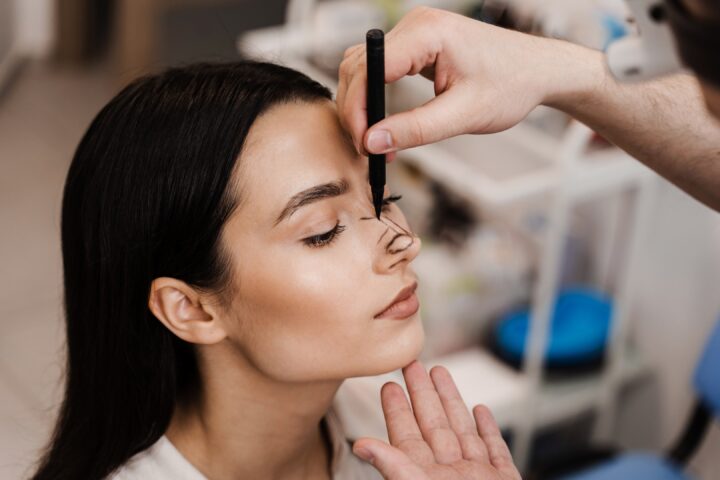
As a Facial Plastic and Reconstructive Surgeon who is board-certified and fellowship trained, Dr. Lee Mandel’s work centers on correcting these structural issues with careful precision. The goal is to help patients breathe more comfortably while also creating natural symmetry that supports the entire face. Every patient who comes in for a rhinoplasty consultation learns very quickly that this procedure is not just about cosmetic refinement. It’s a detailed, functional operation that can improve breathing, create long-lasting harmony with other facial features, and correct long-standing issues that have affected comfort and confidence for years.
As one of the leading facial plastic surgeons, Dr. Mandel’s goal is to give you a full picture of how rhinoplasty procedures can create meaningful, long-term improvement in both breathing and appearance.
The Nose Structure and How It Affects Breathing
The nose has a very complex internal architecture. Behind the surface is a system of cartilage, bone, and cartilage connections, narrow chambers, mucosal lining, and soft tissue that guide airflow from the nostrils into the nasal airway. When everything is aligned and open, air moves smoothly along the nasal septum, through the turbinates, and into the throat. When something is crooked, enlarged, or misshaped, the result is airflow restriction.
The Role of the Nasal Septum and Deviated Structures
One of the most common sources of nasal obstruction is a deviated septum. The septum divides the left and right sides of the nose, and even a small deviation can reduce airflow on one side. Many patients don’t realize they have a deviation until they come in with concerns about difficulty breathing, congestion that gets worse when they lie down at night, or constant mouth breathing.
A deviation can be the result of genetics, injury, prior surgery, or the natural growth pattern of cartilage beneath the nasal bones. During nasal breathing, air should move in a smooth, stable path. When the septum is bent, air hits an irregular surface and becomes turbulent. That turbulence can produce a sensation of blockage even when the nostril looks normal from the outside.
External Structure and Airflow
The outside of the nose affects breathing in ways people often overlook. A drooping nasal tip can collapse the valve area. A narrow bridge can restrict the natural shape of the internal airway. Nasal valves can weaken due to aging or previous procedures, and the patient may feel the sides of the nose collapse when they inhale.
Dr. Mandel routinely evaluates these areas during an exam for his rhinoplasty patients. Successful functional rhinoplasty relies on understanding every part of the nasal structure that contributes to airflow. When the exterior is weak or out of balance, it can interfere with function just as much as an internal septal deviation.
How Poor Nasal Function Affects Daily Life and Facial Balance
When your nose can’t move air comfortably, the impact reaches far beyond simple congestion. Many patients come to Dr. Mandel because they are tired of breathing problems that never seem to improve, or they struggle with sleep, exercise, speaking, and even posture. Difficulty breathing through the nose can cause you to rely on mouth breathing, which dries the throat, disrupts sleep, and contributes to loud snoring.
A patient’s nose also frames the center of the face. When the structure is crooked or asymmetric, it can throw off harmony with the cheeks, chin, lips, and other facial features. That imbalance may not be severe, but even subtle misalignment can create a sense that the face lacks equilibrium.
The challenge is that form and function are connected. If Dr. Mandel only reshapes the nose’s shape without caring for internal support, breathing may worsen. If he only straightens the inside without correcting severe asymmetry on the outside, the end result may not look natural. Balance between both goals is essential.
Dr. Mandel’s Approach to Functional and Aesthetic Rhinoplasty
As a surgeon who specializes in facial plastic surgery, Dr. Mandel’s priorities during rhinoplasty include preserving structural integrity, maximizing airflow, and enhancing proportions in a way that respects the individuality of each patient. He never approaches nose surgery with a one-size-fits-all mindset. Your nasal function, underlying anatomy, medical history, facial symmetry, and cosmetic goals are unique, so your plan must be equally personalized.
Comprehensive Evaluation Before Surgery
A detailed consultation begins with a close assessment of both internal and external structures. Dr. Mandel performs a thorough examination to determine how much of the breathing difficulty is caused by septal deviation, valve collapse, turbinate hypertrophy, or other issues such as sinus problems. Sometimes, a combined rhinoplasty and sinus surgery approach is needed if the sinuses also contribute to the blockage.
He then evaluates the external nose to understand how changes will influence facial harmony. The relationship between the nose and other facial features is critical to achieving natural-looking results in cosmetic surgery.
Together, patients and Dr. Mandel review realistic expectations, potential improvements, and any limitations based on prior surgery or scar tissue. The goal is always to improve breathing and refine appearance in a balanced, natural way.
Advanced Techniques to Improve Function and Appearance
There are two primary approaches to rhinoplasty: open rhinoplasty and closed rhinoplasty. Both techniques have advantages depending on anatomy and goals.
Open Approach for Complete Precision
The open approach involves a small incision across the columella that allows full visualization of the cartilage and nasal bones. This method is ideal for complex corrections, major structural reshaping, or reconstructive surgery. It provides maximum access for rebuilding weakened valves, straightening the septum, stabilizing cartilage beneath the nasal tip, and creating lasting improvements in nasal function.
Closed Approach for Subtle Refinement
A closed procedure uses incisions entirely inside the nostrils. There’s no visible external scar. This technique can be ideal for primary rhinoplasty when minor adjustments are needed. Although visualization is more limited, it can produce beautiful cosmetic rhinoplasty results in the right candidate.
The method Dr. Mandel chooses to perform rhinoplasty depends entirely on the patient’s underlying anatomy, desired changes, and the degree of correction needed.
Functional Goals of Rhinoplasty
Functional rhinoplasty focuses on improving airflow while stabilizing structures that prevent collapse. Several techniques can be used, depending on the problem.
Straightening the Septum
Straightening the septum helps restore the normal path of airflow through both sides of the nose. By correcting the deviation, Dr. Mandel can significantly improve breathing comfort and reduce the sensation of blockage.
Strengthening the Nasal Valves
The valves are the narrowest part of the airway and a common source of collapse. Reinforcing these areas can prevent the nostrils from caving inward during deep inhalation.
Reshaping the Turbinates
In some patients, the turbinates become enlarged. Gentle reduction helps open the nasal passages without compromising the natural function of the mucosa.
Balancing External Structures
Refining the nasal tip, adjusting the bridge, and correcting crookedness contribute to both cosmetic improvement and functional stability. When the outside is well supported, airflow improves.
Aesthetic Goals of Rhinoplasty
While functional improvement is essential, the visual balance of the nose is also important. A nose that better reflects your facial appearance and blends smoothly with other structures creates enhanced confidence and harmony.
Creating Natural Facial Balance
Rhinoplasty should never look artificial. Dr. Mandel’s goal is to maintain the essence of the patient’s nose while refining proportions in a way that fits their overall facial balance. This might involve straightening a crooked bridge, refining a bulbous tip, or making subtle contour changes.
Respecting Proportions and Symmetry
The key to beautiful results lies in proportion. The nose should not overpower the face or distract from other facial features. It should align naturally with the chin, eyes, lips, and upper lip. Sometimes, improving facial harmony can involve combining procedures, such as pairing a nose job with a chin implant to bring the profile into proportion.
What to Expect During Rhinoplasty Surgery
Many patients feel anxious about what surgery involves. Understanding the process can ease much of that concern.
Anesthesia and Comfort
Depending on the complexity, Dr. Mandel may use general anesthesia, local anesthesia, or local anesthetic paired with sedation. The choice is based on safety, comfort, and the extent of the procedure.
A breathing tube is used in some cases for full airway control under general anesthesia. Most patients experience very little discomfort during the procedure itself.
The Surgical Process
During surgery, Dr. Mandel works carefully to preserve healthy structures while correcting areas that cause obstruction or asymmetry. This precise work involves reshaping bone and cartilage, straightening the septum, supporting weakened valves, fine-tuning the nasal tip, and improving both the internal and external structure.
Absorbable sutures are used in most of the internal work. Some patients require small grafts to support weakened cartilage or reinforce the airway. The entire procedure is performed with a focus on stability and natural contour.
Recovery and Healing After Rhinoplasty
Recovery varies depending on the patient and the extent of the surgery. Although every person heals at their own pace, there are common milestones that most patients experience.
Immediate Post Operative Period
There may be swelling, facial swelling, or minor bruising around the eyes. Keeping the head elevated helps reduce these symptoms. Nasal packing is not always required, but when it is used, it is removed early in recovery.
Difficulty breathing through the nose is normal during the first several weeks due to swelling. This improves gradually as the nasal airway opens.
The First Few Weeks
During the first few weeks, patients are encouraged to avoid strenuous activity, heavy lifting, and sleeping on their backs if it causes pressure. Normal activities are resumed gradually.
Follow-up appointments ensure that healing progresses smoothly, and Dr. Mandel monitors airflow, alignment, and incision healing closely.
Long Term Healing
Most patients see substantial improvement in breathability within four to six weeks. Full refinement of the shape takes longer as swelling continues to settle.
Rhinoplasty results continue to evolve over several weeks and even months. The outcome is a nose that feels natural, moves air comfortably, and harmonizes beautifully with the rest of the face.
Why Individualized Rhinoplasty Planning Matters
Every patient’s nose has unique characteristics. Some have thicker skin, some have very delicate cartilage, and some have a history of prior surgery or injuries. Tailoring surgical procedures to each individual is essential for creating predictable, stable results.
Functional issues such as nasal obstruction must be corrected without compromising cosmetic goals. Cosmetic improvements must preserve or enhance nasal function without narrowing the airway. Combining these goals requires a surgeon who deeply understands both anatomy and aesthetics.
That is the advantage of working with a rhinoplasty surgeon who specializes in facial plastic training.
Choose Rhinoplasty With Dr. Lee Mandel for Better Breathing and Natural Facial Harmony
If you’ve struggled with breathing problems, nasal obstruction, or a nose that feels out of balance with other facial features, it may be time to explore what rhinoplasty can do for you. Many patients don’t realize how much of a big difference improved nasal function can make in overall well-being. Correcting the internal structure can enhance airflow, reduce sinus pressure, and finally allow you to breathe comfortably. At the same time, refining external contours can bring your features into harmony and enhance your facial appearance.
Whether you’re considering functional improvements, aesthetic refinement, or a combination of both, the first step is a detailed consultation that gives you a clear understanding of your underlying anatomy and the possibilities for safe, personalized correction. During the initial consultation, you may also discuss rhinoplasty cost and other important aspects related to the procedure.
You deserve a nose that not only looks right for your face but also works the way it should. If you’re ready to breathe better, feel more confident, and restore natural balance, Dr. Mandel invites you to schedule a consultation. Together, you can create a surgical plan designed specifically for your goals, your comfort, and your long-term well-being. To schedule a consultation, call us today at 954-983-1211 or contact us online.
Frequently Asked Questions
Is Rhinoplasty Painful?
Most patients describe the recovery as very manageable. Medications help control discomfort, and swelling is usually the most noticeable issue. Many patients are surprised to learn that nasal soreness is mild and usually improves within the first few days. Breathing may feel slightly restricted at first due to internal swelling, but this sensation improves steadily as the tissues calm down.
How Long Before I Can See the Final Rhinoplasty Results?
While early improvements are noticeable quickly, the complete refinement of the nose can take several weeks to months. Swelling resolves gradually, particularly at the nasal tip. The healing process continues beneath the surface even after the outer swelling fades, which means definition improves in subtle stages. Patients with thicker skin may notice that the final contour takes longer to appear compared to those with thinner skin.
Does Rhinoplasty Provide Relief From Sinus Problems?
If structural issues contribute to sinus problems, functional improvements to the airway can help reduce congestion and pressure in the sinus cavity. Correcting a deviated septum or enlarged turbinates can create better airflow and drainage. Improved nasal function may also reduce the frequency of sinus infections by helping the passages stay clear. For patients with both cosmetic and breathing concerns, combined functional and aesthetic rhinoplasty can be an effective long-term solution.
Can Rhinoplasty Improve Subtle Breathing Issues That Only Occur During Intense Exercise?
Yes. Some individuals experience airflow restriction only during high-intensity activities, such as sprinting or competitive sports. In these cases, the nasal valves or internal nasal structures may partially collapse under increased airflow demand. Structural rhinoplasty techniques can reinforce weakened cartilage, widen narrow internal valves, and optimize nasal aerodynamics. For athletic patients, this fine-tuning can lead to noticeably easier breathing during exertion without changing the external appearance unless desired.
Is It Possible to Perform Rhinoplasty While Preserving Extremely Thin or Delicate Nasal Skin?
Patients with unusually thin nasal skin require a very specific surgical approach because even small structural changes can show through the skin once healed. Surgeons use refined grafting techniques, ultra-smooth contouring, and precise cartilage shaping to prevent visible irregularities. In some cases, composite grafts or soft-tissue camouflage materials are placed to create a smooth, natural surface. With careful planning, thin-skin patients can achieve refined results without surface distortions.
How Does Rhinoplasty Work for Patients With an Extremely High Nasal Bridge or Ethnic Nasal Structures?
Some individuals have nasal frameworks that fall outside typical anatomic classifications, such as hyper-projected bridges, unusually thick nasal bones, or unique ethnic features. These cases require advanced pre-operative imaging, customized grafting plans, and highly controlled osteotomies. Surgeons focus on preserving cultural identity while creating balance. Modern techniques allow reshaping without erasing the hereditary characteristics that patients want to maintain.
What Happens if a Patient Has an Unusual Healing Response?
Some patients experience uncommon healing patterns where scar tissue forms more aggressively or swelling resolves more slowly than expected. Surgeons may treat early signs with steroid injections, lymphatic drainage techniques, taping, or temporary nasal splints. For excessively strong scar maturation, controlled revision with minor soft-tissue adjustments can help restore definition. These responses are rare, and with close follow-up, surgeons can manage them effectively to preserve the intended rhinoplasty result.
